No media money was spent behind this but in less than a month it has delivered 1.7 million views on YouTube and garnered press coverage on 'Ellen', 'The View' and 'Entertainment Tonight'. Courtesy of Ogilvy Canada.
Impressively, it has delivered three times the traffic spike to CampaignForRealBeauty.com as the brand's SuperBowl spot and resultant publicity last year.
A good case of make interesting stuff and people will spend time with you, whether your media budget is zero or billions.
Technorati tags:OgilvyOne Ogilvy
Monday, October 30, 2006


Sunday, October 29, 2006
Text100 In Second Life
An interesting video from Text 100, filmed entirely in Second Life it provides a great introduction as to why it is a communication tool of growing importance.
Nissan Puts Sentra Into Second Life

As promised last week, Nissan has just unveiled a Second Life extension of its campaign for Sentra. Here's the location's SL URL, and here are more details from Giff at Electric Sheep. A giant vending machine with very realistic action. The machine dispenses Sentras. The car itself is driveable.

Thursday, October 26, 2006
Mentos & Diet Coke Sponsor Video Clips
On May 31, Fritz Grobe and Stephen Voltz posted a video clip about the explosive results of combining Diet-Coke & Mentos explosion on Revver. The video has been seen over 6 million times and has inspired thousands of imitators.
Mentos were quick to capitalize on the publicity, posting the pair's video on their home page and sending them hundreds of free Mentos candies to continue producing the clips. But Coca-Cola appeared to remain distant from the videos — until this week.
More on Ogilvy Digital Mix
Wednesday, October 25, 2006
Real Time Chat
http://gabbly.com A cracking little app that allows realtime chat on any site with other users accessing the same site from gabbly.
Tuesday, October 17, 2006
Common Sense By-Pass At The Mention Of Digital
Why at the mention of ‘digital’ do people often undergo a common sense and marketing by-pass. And that as a result, a lot of nonsense is being peddled around the marketing communications industry, usually to the detriment of brands who are paying people a lot of money to explain to them how best to use these new channels.
The most important myth, you could call it an untruth, that is fast becoming ‘fact’, is the idea of a ‘digital consumer’. Suddenly there is this new persona that we are being presented with. We are being told how important it is to understand this ‘digital consumer’ who is, it seems, communicating in a way that’s totally new. The myth of the digital consumer who operates in a cyber world of his own is shrouded in mystery and making everyone nervous.
The sad consequence of this misconception, being put out mainly, I believe, by digital vendors, is massive confusion and decision paralysis. This was confirmed to me at Verge 2005, a major interactive forum organised by OgilvyOne. Original research by the agency, for the forum, revealed how senior clients realise the importance of digital channels to their business, but are largely baffled by the digital age and believe they haven’t really got a handle on it. I’m not surprised when they aren’t being given the facts.
There is no such thing as the ‘digital consumer’. There is no great mystery about how they think and what they want. These consumers are doing exactly what people have been doing for thousands of years – communicating with each other. The fact that technology is enabling them to communicate with each other faster and over distance is being perceived as something unique and extraordinary that needs to be controlled and pinned down.
Rubbish. People talk to each other – they always have. They are talking the same language and saying the same things, they are just not necessarily sitting in their front rooms, doing it over a cup of tea and the TV.
What I believe these new channels have highlighted is that brands and marketers have to step away from the ‘top down’ broadcast thinking that we (brand owners and marketers) tell them (consumers) what they should be thinking and buying. Instead, we have to realise that the interaction and conversation that really counts is the one taking place between consumers.
What the digital age has done is give people more and different ways to have conversations but have also made it so much easier for us to find out what these conversations are about and who is talking to each other (through digital boards, number analysis, chatrooms etc). This is what we should be concentrating on.
We need to be thinking about how to influence conversations that are already taking place between consumers. We need to find out who the important person is in the conversation (the protagonist consumer) and work with them.
In a way it has made things more difficult for brands and marketers. It’s more important than ever to come up with a good idea that can spread sideways rather than from the top down. We need to realise that as advertisers, we are no longer initiating the conversation with consumers – we are trying to become part of the conversation that these people are already having with each other.
That’s going to be difficult enough. So let’s not waste our time trying to figure out what a cyber consumer looks like.
Co-written with Rory Sutherland, Vice Chairman Ogilvy Group
itv ads will never work
Essentially iTV ads tried to narrowcast through a broadcast channel, budget structure and creative mindset. The idea is sound - offering interested parties more indepth ans engaging content but the execution very poor. Consequently expensive for massive wastage and limited actual engagement with responders.
Monday, October 16, 2006
You come here often?
Watching the big agencies trying to get with the digital program is often a bit likewatching a middle-aged married man hitting on a co-ed in a bar.
Paul Beelan has written a paper on Advertising 2.0. It explores the influence of technology in advertising, marketing and media, and the threats and opportunities triggered by the revolution of the new, social internet and how agencies will have to radically change to stay alive. Well worth a read.
http://www.paulbeelen.com/whitepaper/english.html
SnakeOil 2.0
 Over the past 10 years corporations have tried and failed to hijack the internet, treating it like any other medium by broadcasting their message with no respect for or dialogue with their audience. The web is now starting to return to the tenets on which it was built: collaboration, creation and power to individuals.
Some agencies and brands have always accepted and harnessed this: www.campaignforrealbeauty.com is a movement orginated by Dove but very much driven by consumers; debating what real beauty means, posting photographs and stories.
Beware agencies peddling Web 2.0, it means they missed the whole point of the web the first time round.
Image from Hugh Macloed: www.gapingvoid.com
Sunday, October 15, 2006
How to beat banner blindness
It is not about just using rich media – animation, flash, video, audio. It is not about shouting at your audience with flashy graphics and noise.
To create campaigns that really stand out and encourage interaction, without annoying the user you have to match the customer insight with creative message and the placement. Place content in an appropriate place and invite the audience in a relevant way.
How about this for a radical strategy: sit your strategy guy next to your creative and sit both of them next to your media planner. By having this triumverate sitting in two or possibly even three different agencies (remunerated and measured on different metrics) is farcical.
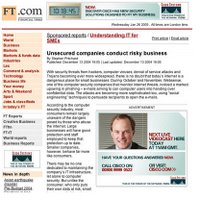 The majority of really succesful campaigns are based on this priciple: Ogilvy's Cisco Livecast where a live webcast took place within an ad unit specifically negotiated with the FT.com reached millions and 60% of those who viewed the unit asked a question to the presenter live and the campign repositioned Cisco from a faceless corporate to a company who listens to it' SMB audience.
There are instances where just a cracking piece of creative wins the day almost irrespective of media placement but these are few and far between.
The Cancer Research UK "I shouldn't be here" campaign illustrated the advances that the advances made in Cancer Research in the past 10 years had saved thousands of lives. Our rich media execution brought this to life.
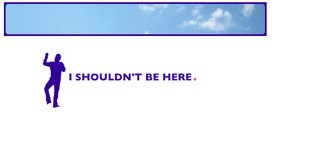 A figue appeared in the middle of the page with the title "I shouldn't be here" he then climbed back into the banner, where he should be, and explained that he had been diagnosed with testicular cancer but had survived thanks to CRUK. Intrusive, yes but with a reason and perfectly linked with the proposition.The campaign generated never before seen levels of donations.
To create campaigns that really stand out and encourage interaction, without annoying the user you have to match the customer insight with creative message and the placement. Place content in an appropriate place and invite the audience in a relevant way.
How about this for a radical strategy: sit your strategy guy next to your creative and sit both of them next to your media planner. By having this triumverate sitting in two or possibly even three different agencies (remunerated and measured on different metrics) is farcical.
 The majority of really succesful campaigns are based on this priciple: Ogilvy's Cisco Livecast where a live webcast took place within an ad unit specifically negotiated with the FT.com reached millions and 60% of those who viewed the unit asked a question to the presenter live and the campign repositioned Cisco from a faceless corporate to a company who listens to it' SMB audience.
There are instances where just a cracking piece of creative wins the day almost irrespective of media placement but these are few and far between.
The Cancer Research UK "I shouldn't be here" campaign illustrated the advances that the advances made in Cancer Research in the past 10 years had saved thousands of lives. Our rich media execution brought this to life.
 A figue appeared in the middle of the page with the title "I shouldn't be here" he then climbed back into the banner, where he should be, and explained that he had been diagnosed with testicular cancer but had survived thanks to CRUK. Intrusive, yes but with a reason and perfectly linked with the proposition.The campaign generated never before seen levels of donations.
Subscribe to:
Posts (Atom)